
2026-09-15 ·
Termite Prevention Steps During New Construction Near Easton
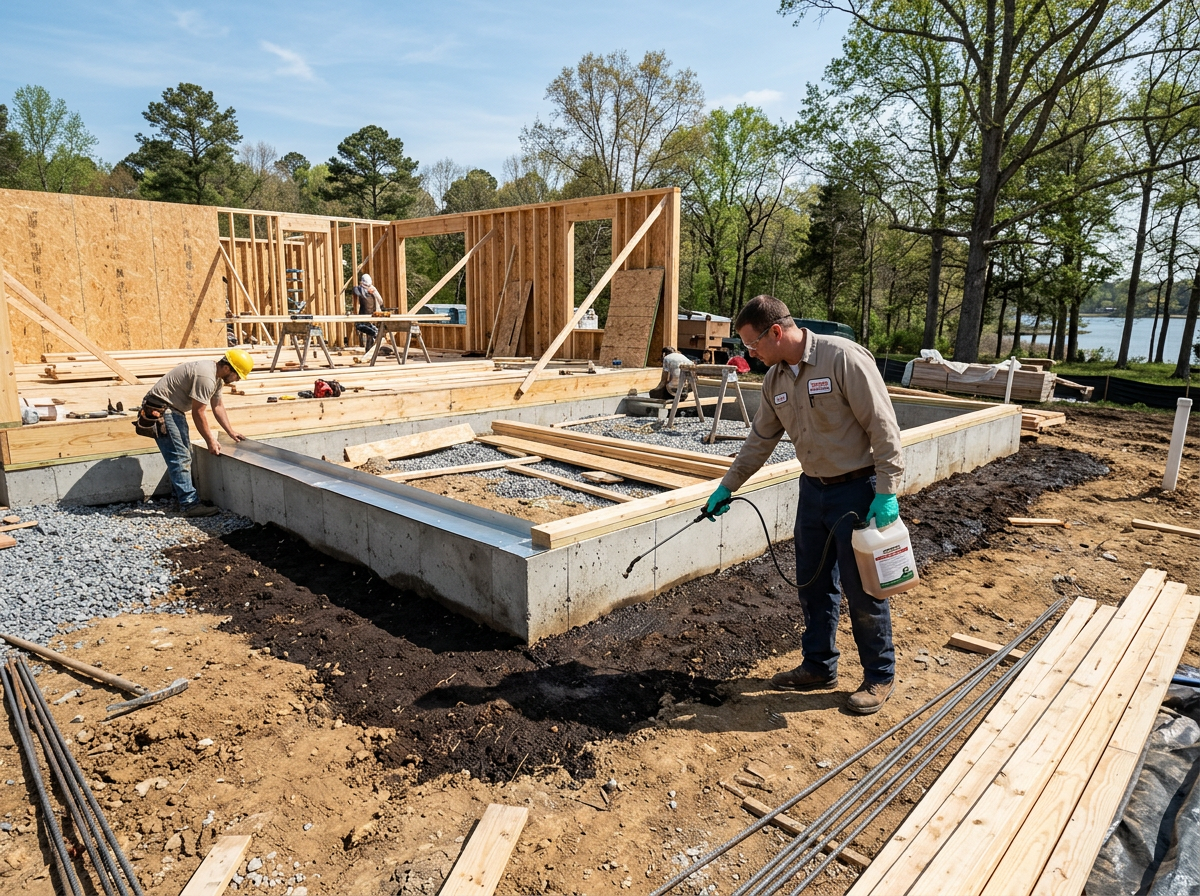
During new construction near Easton, begin with a liquid soil barrier applied in a trench at least 6 inches deep and 6 inches wide along the entire foundation perimeter, followed by bait stations spaced 10 to 20 feet apart once backfill is complete. These steps address the foraging habits of eastern subterranean termites that travel up to 300 feet from colonies and enter through soil contact points common in Talbot County builds. Spring swarmers appear indoors from March through June when colonies are active, making pre-slab treatment essential before concrete is poured.
Site Preparation and Soil Treatment
Eastern Shore lots often sit over a high water table, so excavators must keep the trench depth consistent even when water is encountered during digging. Apply the liquid barrier directly to the soil before any gravel or vapor barrier goes down. This creates a treated zone that termites must cross to reach wood framing. Builders should schedule the application after utilities are stubbed in but before the slab is formed. The same treated soil perimeter continues around porches and attached garages. Once the barrier is in place, cover it promptly to avoid dilution from rain. Termite treatment crews familiar with Easton soils can confirm uniform coverage before the concrete crew arrives.
Foundation and Crawl Space Details
Piers and crawl spaces remain the most common foundation type near Easton because of the water table. Leave at least 18 inches of clearance between soil and the bottom of floor joists so workers can inspect for mud tubes later. Install a 6-mil vapor barrier across the entire crawl space floor and seal it to the foundation walls. Any untreated backfill placed against the stem wall creates a direct path for termites, so treated soil must extend at least 12 inches above final grade on the exterior. Avoid embedding untreated wood stakes or form boards in the soil during construction.
Landscaping and Mulch Placement
Keep mulch beds at least 6 inches below the bottom edge of siding or exterior trim on all sides of the house. Railroad ties placed directly against the foundation create hidden galleries that termites exploit quickly. During final grading, slope soil away from the house at a minimum of 6 inches over the first 10 feet. Store lumber and cardboard debris off the ground and remove it before the landscaper spreads mulch. These simple clearances reduce moisture against the foundation and limit the organic material that attracts foraging workers.
Monitoring and Baiting Systems
Once the home is dried in, install a baiting system around the perimeter with stations every 10 to 20 feet, including corners and any areas where utilities enter the structure. Check stations quarterly during the first two years, then adjust based on activity. Because eastern subterranean termites forage widely, the stations intercept colonies before they reach the structure. Termite baiting systems allow ongoing monitoring without repeated soil disruption. Pair the stations with an annual inspection that looks for mud tubes along piers and sill plates.
Heavy spring rains on the Eastern Shore can push termite activity higher, so coordinate the first post-construction inspection after the wet season ends. How heavy spring rains affect termite activity on the Eastern Shore explains timing adjustments that apply to newly built homes as well.
Final Walk-Through and Documentation
Before the builder hands over the keys, walk the exterior with the termite technician to confirm no untreated soil touches the foundation and that all bait stations are recorded on a site map. Keep copies of the treatment records for future real estate transactions. WDI reports for home sales rely on these documented steps when the property later changes hands. This record also helps future owners understand exactly where monitoring stations are located.