
2026-09-15 ·
Seasonal Termite Swarming Patterns On Maryland Eastern Shore
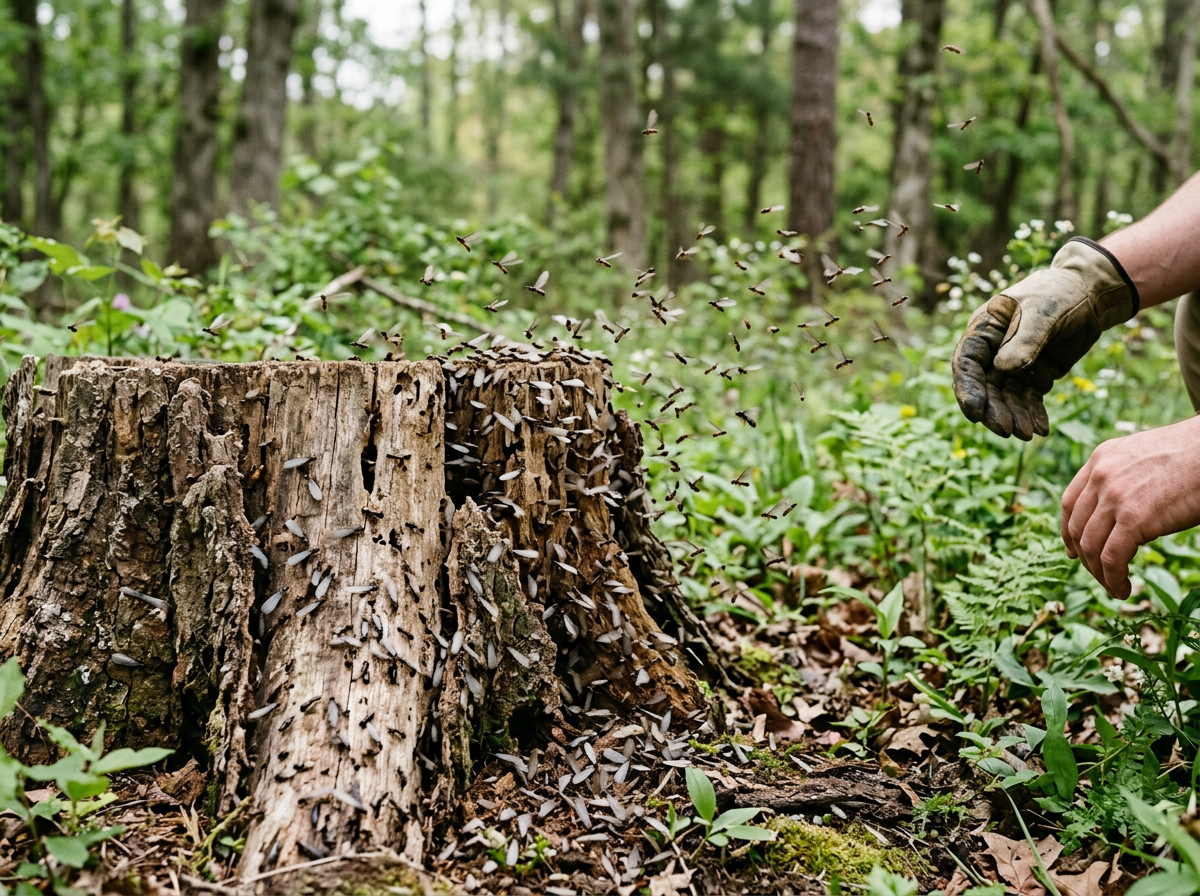
On Maryland Eastern Shore, termite swarming patterns center on spring months when reproductive swarmers emerge from colonies in response to warming soil and rising humidity near the Chesapeake.
Spring Emergence Timing
Eastern subterranean termites send swarmers outdoors or indoors during spring as soil temperatures climb and moisture levels stay high around piers and crawl spaces. These flights usually follow periods of rain that soften the ground above high water tables common on the Eastern Shore. Homeowners often notice discarded wings near windowsills or baseboards after flights that last only a few hours. The same colonies that produce these swarmers forage through mud tubes built along foundations where railroad ties or thick mulch beds sit against siding with less than six inches of clearance. Local humidity keeps soil moist enough for workers to maintain these tubes year-round until swarm season arrives.
Local Conditions That Shape Swarming
High water tables under many Eastern Shore homes force colonies to build shallow galleries that reach the surface faster once spring warmth arrives. Piers and crawl spaces stay damp longer than slab foundations, giving colonies steady moisture that supports larger populations ready to swarm. Mulch beds and railroad ties against foundations supply both food and cover, allowing workers to extend tunnels right up to wood siding. Chesapeake humidity slows evaporation so tubes remain intact even after dry spells. These same conditions affect how liquid soil barriers perform when applied in trenches around the perimeter, a detail covered in related discussions of local soil conditions.
Recognizing Swarmers and Mud Tubes
Indoor swarmers appear as dark-bodied insects about one-quarter inch long with equal-length wings that they shed after flight. Finding these wings or live insects inside during spring points to an active colony nearby rather than an outdoor mating flight. Mud tubes on foundation walls or piers show the same colony is traveling between soil and wood. These tubes measure roughly the diameter of a pencil and feel moist when fresh. Homeowners who spot either sign benefit from a professional termite inspection that maps tube locations and checks crawl spaces without assuming any coverage details. Early confirmation helps decide between monitoring stations or soil treatment options suited to Eastern Shore lots.
Next Steps After Spotting Activity
When swarmers appear indoors or fresh tubes show on piers, schedule an inspection focused on the crawl space and foundation perimeter. An inspection reveals whether baiting systems or liquid barriers fit the property layout better than other approaches. Properties in Talbot County often face similar wet-soil challenges that influence treatment placement. After inspection, technicians may recommend placing stations every 10 to 20 feet along the exterior where soil allows consistent monitoring visits throughout the year. Keeping mulch six inches below siding and removing wood debris near foundations reduces future attractants without changing the core swarming pattern driven by local climate.