
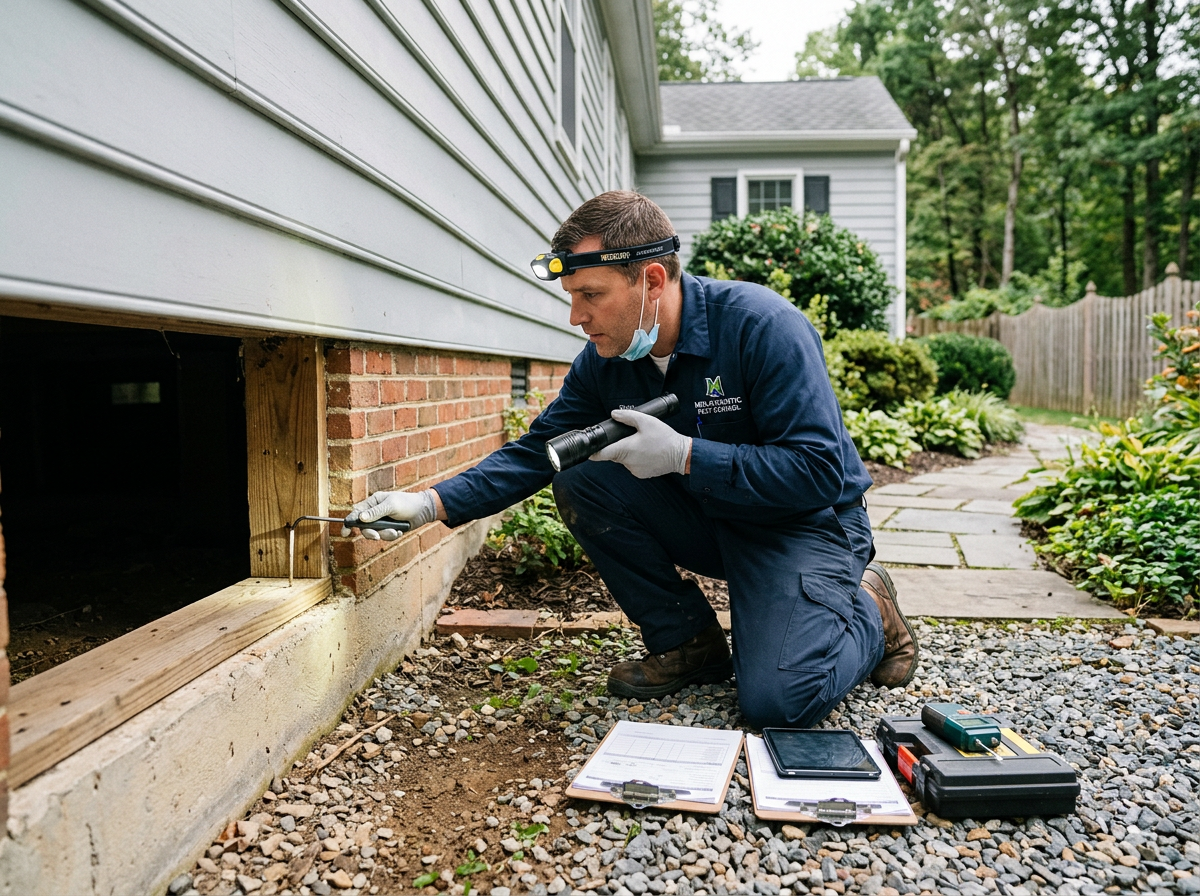
On the Eastern Shore, WDI reports are ordered by real estate agents or lenders when a home goes under contract. The inspection focuses on mud tubes along pier foundations, joists, and sill plates in crawl spaces that sit over a high water table. Spring swarmers inside living areas often trigger the call, though homeowners frequently mistake them for flying ants. A technician checks every accessible wood member and notes any active galleries or shelter tubes that could affect the sale.
Eastern Shore homes built on piers allow constant wood-to-soil contact, especially when mulch beds or railroad ties touch the foundation. These conditions keep subterranean colonies foraging beneath additions and slabs. The report records visible evidence without promising future performance, and any active tubes or damaged wood must be disclosed before settlement proceeds. Re-inspections after corrective work verify the site meets lender requirements.
WDI Reports for Home Sales Near You — Choose Your City
Every city below has its own local WDI Reports for Home Sales page with coverage details.
St. Mary's County
Somerset County
Wicomico County
Talbot County
Queen Anne's County
Harford County
Prince George's County
Worcester County
Anne Arundel County
Calvert County
Charles County
Dorchester County
Frederick County
Kent County
Prince George's
Baltimore County
Somerset
Wicomico
Charles
Cecil
Howard County
Caroline County
Washington County
Montgomery County
Harford
Queen Anne's
Technicians enter crawl spaces to examine soil moisture, ventilation, and wood contact points that liquid barriers or bait stations must address later. Gaps around plumbing penetrations or untreated soil beneath concrete slabs are common failure points where colonies re-enter. The report simply documents current conditions so buyers and sellers can negotiate repairs or treatments before closing.
High water tables in Easton and nearby waterfront communities keep soil damp year-round, making it harder to maintain a continuous treatment zone. Inspectors note these site-specific factors so the report reflects the real risk rather than generic language. Findings stay limited to what is visible and accessible on the day of the visit.
Technician insight
In Easton the thing that catches most people out with WDI Reports for Home Sales is how many pier homes still have railroad ties or thick mulch piled right against the foundation blocks. That constant moisture bridge keeps colonies active even when the visible tubes look old, and it forces the report to flag the exact perimeter sections that will need follow-up treatment before the buyer’s lender will sign off.
Pier Home Crawl Space Finding Near Easton
A waterfront cottage under contract showed active mud tubes on multiple piers during the pre-settlement inspection. The high water table had kept soil damp beneath the addition slab, allowing foraging tubes to reach untreated joists. We documented the tubes and moisture sources, then returned after the seller’s contractor installed a soil barrier. The updated report cleared the property for closing.
WDI Reports for Home Sales Services We Offer
✓Pre-Settlement WDI Inspection
Full crawl space, basement, and exterior perimeter inspection that records active mud tubes, swarmers, and wood damage before closing.
✓Report Preparation
Written WDI document formatted for lenders and title companies that lists observed termite evidence and conducive moisture conditions.
✓Re-Inspection After Treatment
Follow-up visit that verifies corrective work was completed and updates the report for the settlement table.
✓Crawl Space and Pier Inspection
Targeted check of pier foundations and under-floor areas where high water tables keep wood in constant contact with soil.
✓Exterior Foundation Inspection
Walk-around that examines grade, mulch beds, and expansion joints where colonies often maintain foraging tubes.
✓Moisture and Conducive Conditions Survey
Documentation of standing water, poor ventilation, and wood-to-soil contact that supports ongoing subterranean termite activity.
✓Annual Re-Inspection
Yearly site visit that updates the original WDI report for properties still listed or under contract.
How it works
- 1
Schedule and Access
Agent or seller books the inspection and provides entry to crawl space and attic areas.
- 2
Interior and Exterior Search
Technician examines foundation walls, piers, joists, and soil for tubes, damaged wood, and swarmers.
- 3
Findings Documentation
All visible evidence and conducive conditions are recorded with photos and location notes.
- 4
Report Delivery
Completed WDI form is sent to the parties handling the transaction within the required timeframe.
Pricing
Scope depends on square footage, crawl space access, and whether re-inspection is required after treatment; call for a current quote.