
2026-09-15 ·
How To Identify Termite Damage In Easton Historic District Homes
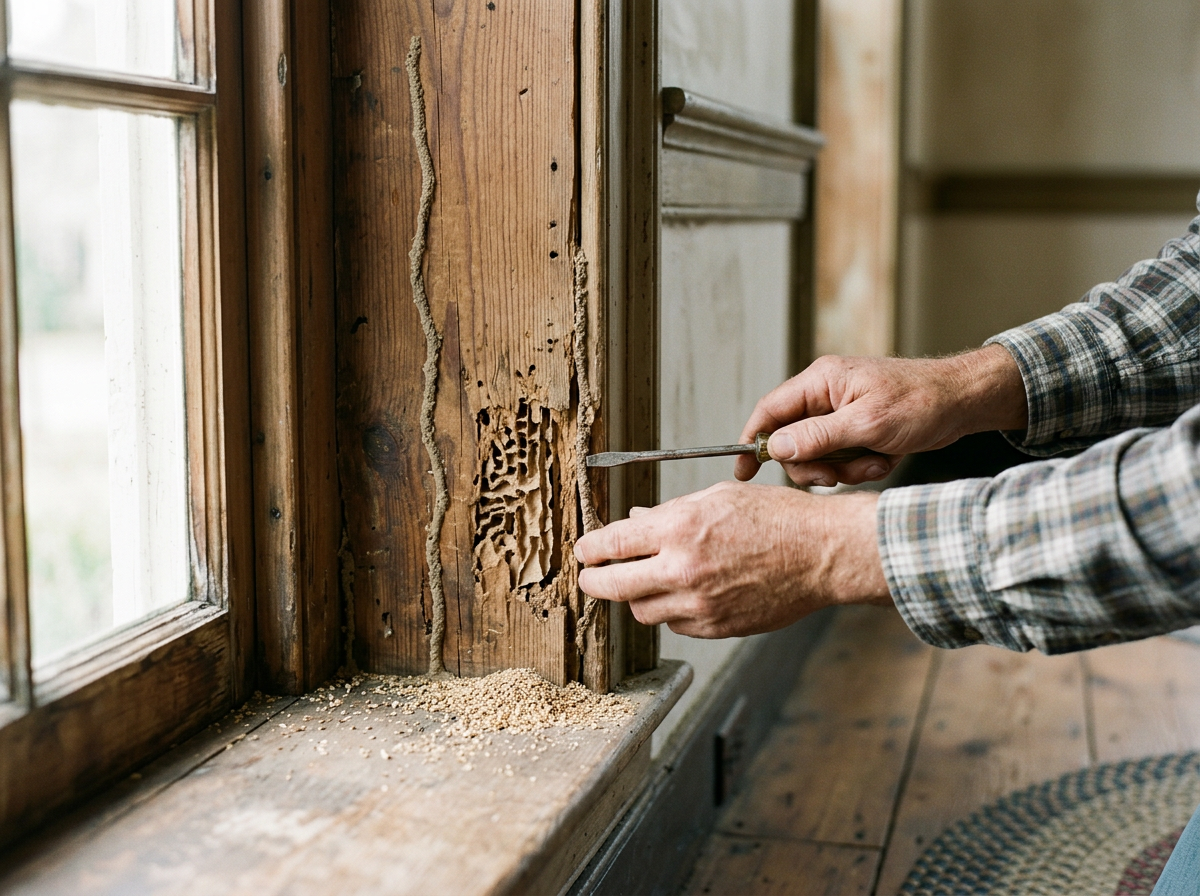
Termite damage in Easton Historic District homes shows up first as hollowed framing and baseboards with thin mud residue along foundation walls and pier supports. Eastern subterranean termites create these patterns in older wood structures set over high water tables, where moisture draws foraging colonies close to piers and sill plates.
Checking Wood for Hollowing and Galleries
Inspect baseboards, door frames, and window sills by tapping with a screwdriver handle. Damaged sections sound dull and give way easily because termites remove the softer interior layers while leaving a thin outer shell. In Easton homes built before 1950, this often appears along porch posts and first-floor joists where wood contacts soil or old railroad ties used as edging. Run a pocketknife along grain lines; galleries follow the wood rather than cutting across it like carpenter ants do. Pay extra attention to areas near mulch beds kept within 6 inches of siding, as the constant moisture encourages colonies to bridge the gap. Historic district crawl spaces with limited clearance make these checks harder but more important, since piers sit directly in damp soil.
Spotting Mud Tubes on Foundations
Look for pencil-thick tubes running vertically along brick or block foundations from ground level up to 18 inches or higher. These tubes protect termites moving between soil and wood during dry periods. In Easton, tubes frequently form on the north side of homes where shade keeps humidity higher near Chesapeake Bay influences. Break a small section of any tube you find; active ones get rebuilt within days. Check behind lattice work on porches and around utility entries where tubes can hide. Older homes often have multiple layers of paint or parging that conceal early tubes until they reach interior framing.
Watching for Spring Swarmers Indoors
Eastern subterranean termites produce winged swarmers from March through May in Talbot County. Finding discarded wings near windows or a few live insects on interior sills points to a nearby colony. Swarmers appear after rain when temperatures rise above 70 degrees, often exiting from small holes in baseboards or under thresholds. Unlike flying ants, termite swarmers have equal-length wings and thick waists. Note the location of any wings because they indicate the colony is already inside the structure rather than just foraging nearby.
Inspecting Piers and Crawl Spaces
Easton historic homes rest on brick or stone piers with crawl spaces that stay damp year-round. Shine a flashlight along each pier for mud patches or softened wood at the top where sills meet the masonry. Probe joists with an awl every 4 feet; soft spots deeper than 1/4 inch suggest gallery activity. High water tables mean these spaces rarely dry out, so termites can forage up to 300 feet from the main colony through soil tunnels. Remove stored items that block views of the foundation walls during inspection.
A professional termite inspection provides a systematic check of these areas using moisture meters and borescopes in tight historic framing. For homes listed for sale, a WDI report documents visible damage and activity in a format lenders require. Readers comparing insects often find the guide on differentiating carpenter ants from termites in Maryland basements helpful for narrowing down the source.