
2026-09-15 ·
How Heavy Spring Rains Affect Termite Activity On The Eastern Shore
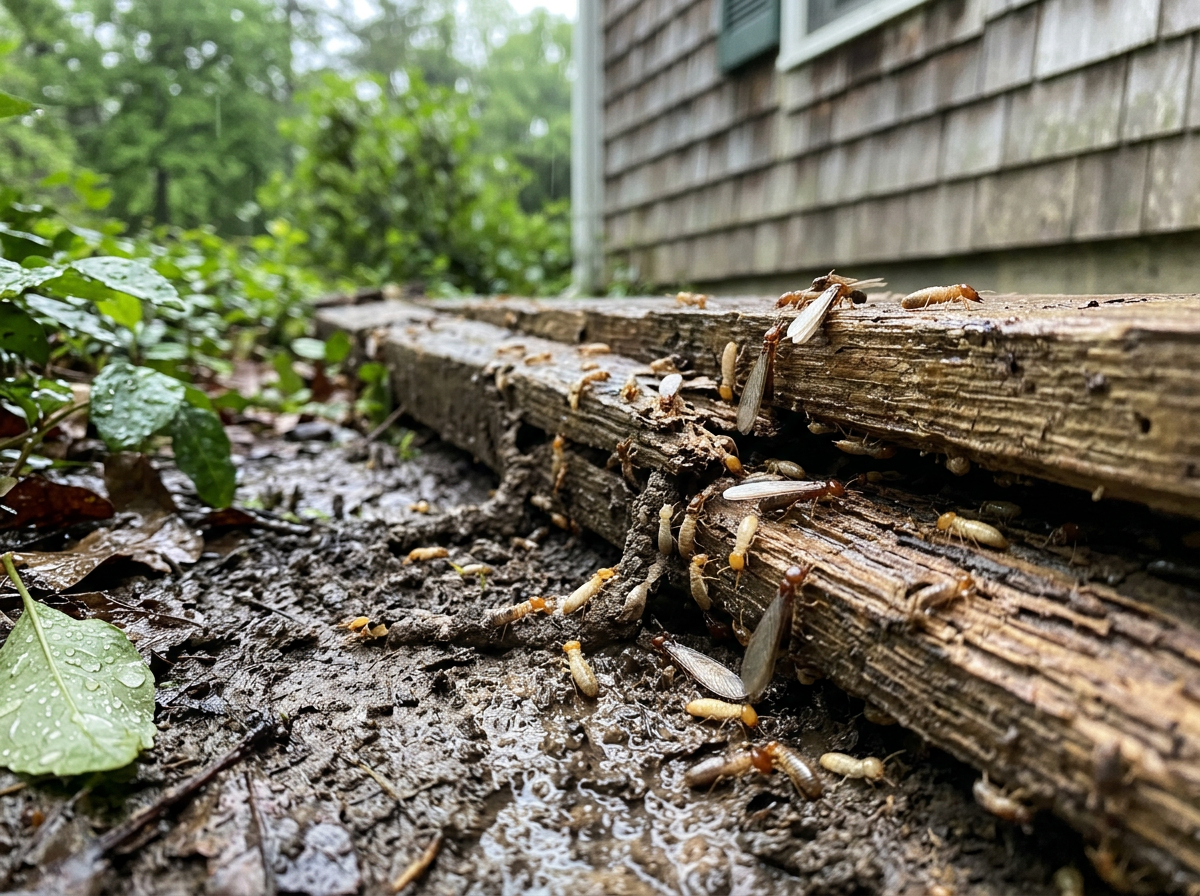
Heavy spring rains on the Eastern Shore increase eastern subterranean termite activity by saturating the soil and extending the time colonies can forage near foundations without drying out.
Soil Saturation and Foraging Expansion
Eastern Shore soils already sit above a high water table, so spring downpours push moisture higher around pier foundations and crawl spaces. Termites follow this moisture outward from established colonies, often reaching 50 to 100 feet in search of new wood sources. The added water softens the ground, letting workers construct fresh mud tubes along foundation walls and sill plates more quickly than in drier months. Homeowners in low-lying spots notice these tubes first on the north side of houses where shade keeps the soil wet longer. Liquid soil barriers applied before the rainy season lose effectiveness when water channels form around the trench line, allowing termites to cross treated zones.
Spring Swarming and Indoor Triggers
Rain followed by warm days often coincides with the March-to-May swarming window for eastern subterranean termites. Winged reproductives emerge from soil near foundations and fly toward lights inside homes, especially after evenings with standing water. Once inside, the swarmers shed wings on windowsills and floors, leaving small piles that signal nearby colony pressure. The same moisture that triggers swarms also keeps the colony hydrated, so more workers remain active instead of retreating deeper underground. Properties with railroad ties or thick mulch beds pressed against siding see the highest number of indoor sightings because those materials stay damp for days after a storm.
Local Conditions That Amplify the Effect
Chesapeake humidity keeps the air around crawl spaces moist even between rain events, compounding the impact of heavy spring showers. Homes in places like Cordova or Trappe with older pier construction and minimal ground clearance often retain water longer under the structure. Mulch beds placed within six inches of siding trap this moisture against the wood, creating a steady bridge for termites moving from soil to framing. WDI reports requested during home sales frequently note these conditions when inspectors check after a wet spring. The combination of high water table, organic ground cover, and frequent rain makes the Eastern Shore more prone to visible termite signs than drier inland counties.
Practical Steps After Heavy Rains
Check the perimeter for new mud tubes within a week of a major storm, focusing on shaded foundation sections and areas near downspouts. Clear mulch and debris at least six inches away from siding to reduce direct moisture contact with wood. Schedule a termite inspection when tubes appear or swarmers are found indoors so the extent of activity can be mapped. Properties already using termite baiting systems benefit from checking station activity after wet periods because increased foraging often shows up first at the stations. Readers can also review local soil conditions that influence liquid termiticide performance and moisture control steps that reduce termite risk around Chesapeake Bay homes for additional context on Eastern Shore conditions.