
2026-09-15 ·
Differentiating Carpenter Ants From Termites In Maryland Basements
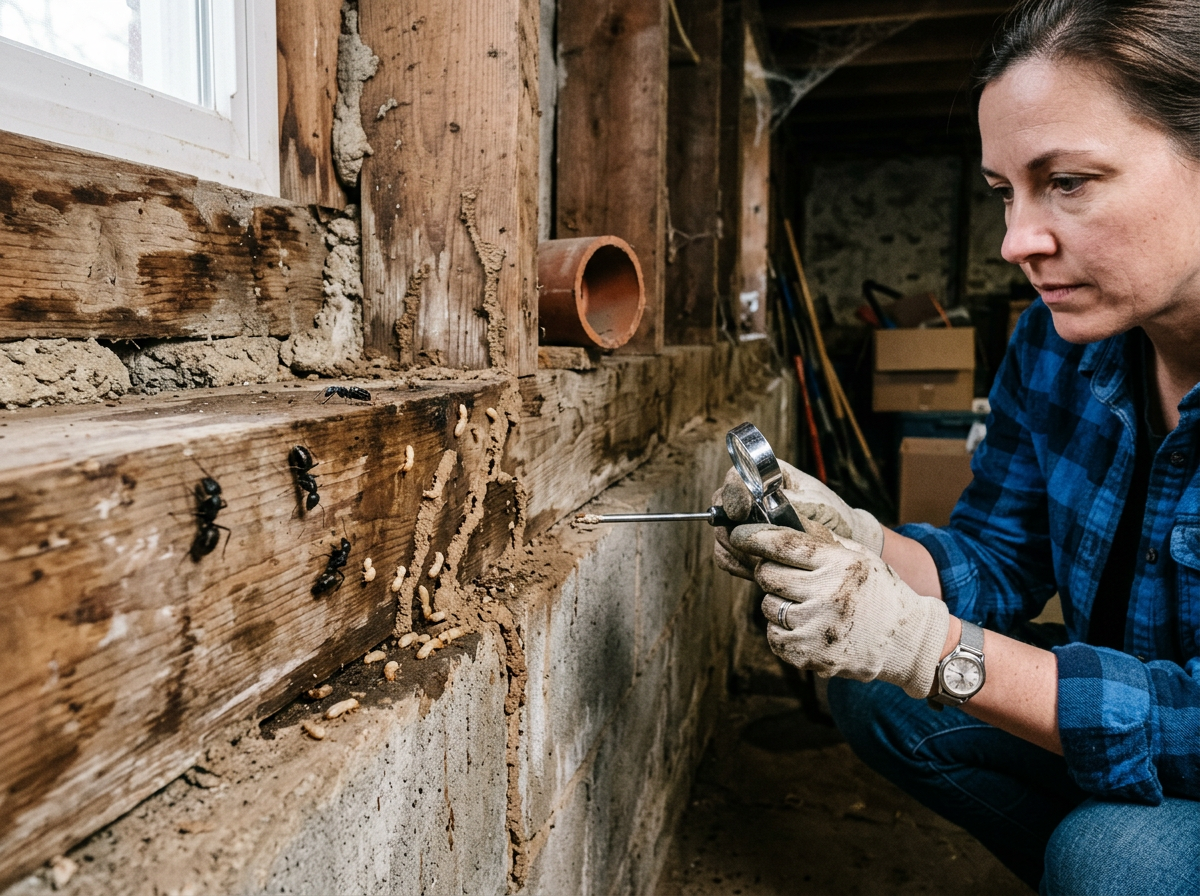
Carpenter ants in Maryland basements display elbowed antennae and a constricted waist while eastern subterranean termites show straight antennae and a broad waist without constriction. Homeowners on the Eastern Shore can confirm the difference by examining any insects found near foundation piers or in crawl spaces over the high water table, noting that termites leave mud tubes along walls and carpenter ants produce fine sawdust piles without soil.
Visual Identification Features
Maryland homeowners first separate the two pests by body shape and antennae. Carpenter ants measure 1/4 to 1/2 inch long with a smooth, rounded thorax and elbowed antennae that bend at a clear angle. Eastern subterranean termites measure 1/8 to 1/4 inch with a rectangular head, straight antennae, and no waist constriction. Winged swarmers of both appear in spring, yet termite wings are equal in length and break off easily while carpenter ant wings differ in size and remain attached longer. These traits remain consistent in basements from Easton to the Chesapeake humidity zones where moisture supports both insects.
Evidence Found in Basements
Termites create visible mud tubes along foundation walls and piers that protect them while traveling from soil to wood. These tubes measure about 1/4 inch wide and feel moist when fresh. Carpenter ants leave behind clean, smooth galleries inside joists or sill plates without any mud lining and often deposit coarse frass that looks like sand mixed with insect parts. In Eastern Shore homes, railroad ties or mulch beds placed against foundations increase termite tube formation while carpenter ants prefer slightly drier voids above the water table. Checking for these signs during March through June swarm season helps narrow the source quickly.
Maryland-Specific Conditions That Encourage Each Pest
High water tables and humid crawl spaces on the Eastern Shore create ideal entry points for eastern subterranean termites that travel from soil into pier supports. Mulch beds kept closer than 6 inches to siding or wooden trim allow termites easier access, whereas carpenter ants forage up to 100 feet from outdoor nests into basement framing. Spring swarmers indoors often signal termite colonies reacting to Chesapeake moisture, while carpenter ant activity peaks later when temperatures rise and they seek damp but not saturated wood. Seasonal rains can push both pests indoors, yet only termites rely on soil contact and build protective tubes.
Steps for Homeowners to Check
Begin by shining a flashlight along basement walls and piers for mud tubes or sawdust piles. Tap wooden members lightly to listen for hollow sounds that indicate carpenter ant galleries. Note any insects near windows or doors during March to June and collect a sample for comparison against the straight-antennae versus elbowed-antennae difference. Maintain at least 6 inches of clearance between mulch and siding to reduce termite pressure and remove standing water near foundations. These checks provide clear direction before contacting a local service for further evaluation.
Professional Assessment Options
When signs point to termites, a termite inspection focuses on mud tubes and soil contact points common in Maryland crawl spaces. For confirmed eastern subterranean termite activity, eastern subterranean termite control uses liquid barriers or bait stations spaced 10 to 20 feet apart along the foundation. Homeowners can also review seasonal termite swarming patterns on Maryland Eastern Shore and how heavy spring rains affect termite activity on the Eastern Shore to understand timing. These resources help match observed evidence to the correct next step without guesswork.