
2026-09-15 ·
Spring Termite Treatment Timing For Easton Properties
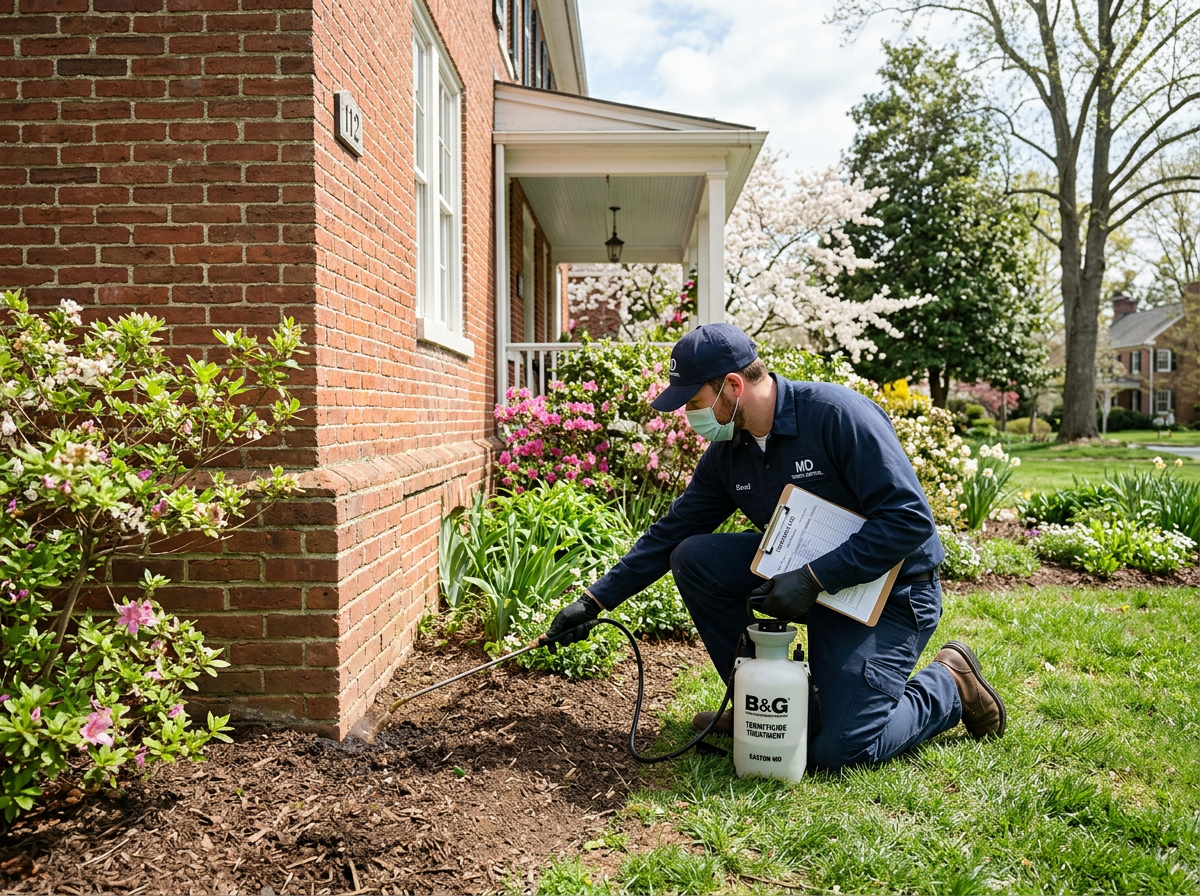
Termite treatment for Easton properties is best started as soon as spring swarmers appear indoors, typically March through May. This window aligns with the flight season of eastern subterranean termites on the Eastern Shore. Acting at the first sign prevents colony expansion through crawl spaces and piers common in local homes.
Spotting the First Signs in Easton Homes
Eastern subterranean termites send out swarmers when soil temperatures rise in spring. Homeowners often notice discarded wings near windows or along baseboards after these flights. Mud tubes along foundation walls or piers also signal active foraging. In Easton, the high water table keeps soil moist enough for colonies to remain active once temperatures hit the right range. Checking these indicators early lets property owners schedule liquid soil barrier applications or bait station installation before damage spreads further. Foraging workers can travel up to 300 feet from the main colony, so visible signs near the house often point to a larger network underground.
Applying Liquid Barriers After Swarm Activity
Liquid termiticide barriers work best when applied once swarmers confirm colony presence. Technicians trench soil 6 inches deep around the foundation and treat at 4 gallons per 10 linear feet. This creates a treated zone that foraging termites must cross. Easton properties with crawl spaces over high water tables require careful placement to avoid washing away the barrier. Spacing between injection points stays at 12 inches along slabs and 18 inches along footings. The treatment targets the soil directly beneath and beside the structure where termites travel from their nests.
Setting Bait Stations in Spring
Baiting systems offer an alternative when soil conditions limit liquid applications. Stations are placed every 10 to 20 feet around the perimeter once swarmers are confirmed. Each station contains a monitoring matrix that termites feed on and carry back to the colony. In Easton neighborhoods, stations near mulch beds or old railroad ties need extra attention because these materials provide food sources close to the foundation. Homeowners should maintain 6 inches of clearance between mulch and siding to reduce attractants. Spring installation lets the bait work through the active foraging period before summer heat slows activity.
Scheduling an Inspection First
A termite inspection identifies active mud tubes and swarm sites before any treatment begins. Inspectors check piers, crawl space soil, and foundation walls for current activity. Easton sellers often request this step early in the season to prepare for WDI reports on home sales. The inspection also notes nearby conditions like railroad ties or thick mulch that may influence treatment placement. Linking inspection findings directly to treatment timing helps avoid unnecessary work while addressing the specific colony causing the spring swarming. See Termite Inspection for details on what the process covers locally.
Connecting Timing to Eastern Shore Patterns
Local soil moisture and Chesapeake humidity keep eastern subterranean termites active longer into spring than in drier regions. Properties near the water table may see earlier swarm activity because the ground stays warmer. Homeowners can review Seasonal Termite Swarming Patterns On Maryland Eastern Shore to compare Easton observations with broader patterns. Once swarmers trigger treatment, follow-up checks at 30 and 90 days confirm the colony is declining. This measured approach matches the practical realities of treating homes built on piers and over moist soils without relying on methods not used in Maryland.