
2026-09-15 ·
How To Document Termite Activity For Insurance Claims In Talbot County
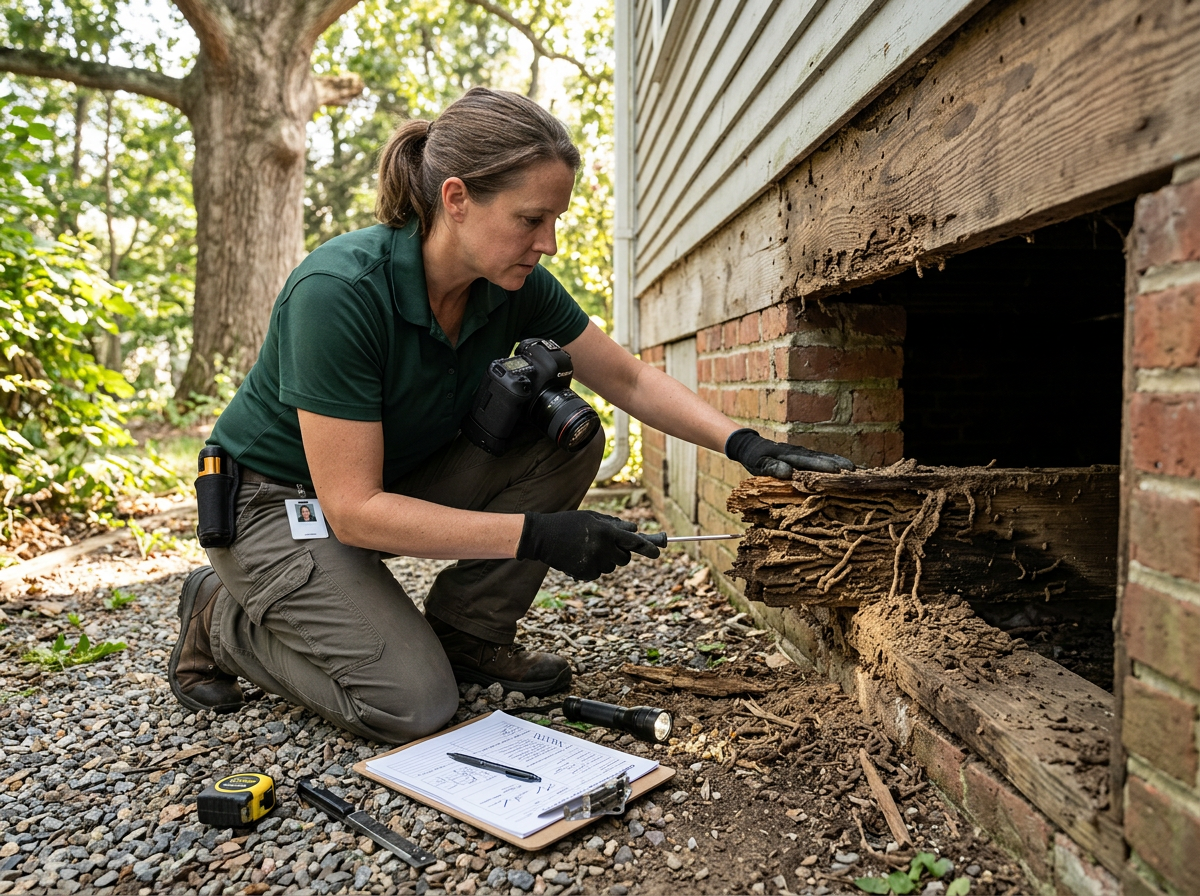
Document termite activity for insurance claims in Talbot County by photographing mud tubes along foundations, recording dates of indoor spring swarmer sightings, and mapping locations relative to piers, crawl spaces, and mulch beds. These steps create a clear timeline and visual record suited to local conditions where eastern subterranean termites travel through soil and shelter tubes.
Identifying Key Signs in Talbot County Homes
Talbot County properties often feature raised piers and crawl spaces over a high water table, which create pathways for termites to reach wood framing. Mud tubes appear as pencil-thick lines of soil along foundation walls or piers when termites need protected travel routes from the ground. Spring swarmers indoors signal active colonies because winged adults leave the nest to start new ones during warmer months. Homeowners should note any railroad ties or thick mulch beds placed directly against siding, as these retain moisture and provide easy access points. Recording the exact height and length of each tube helps show progression over time. Photos taken from multiple angles with a ruler or coin for scale give claims adjusters concrete evidence of activity tied to Chesapeake humidity levels that keep soil moist year-round.
Taking Effective Photographs and Notes
Clear photographs form the core of any claim file. Capture mud tubes at different times of day with natural light to show texture and connection to the soil. Include a date stamp or handwritten note with the day’s date in every frame. Photograph swarmers on windowsills or near baseboards during March through May when flights typically occur in the region. Write short descriptions that list the room, wall orientation, and distance from the nearest exterior grade. Keep a simple notebook or digital log that pairs each image with the time it was taken and weather conditions that day. Avoid moving or disturbing tubes until after photos are complete so the original evidence stays intact for later review by inspectors or adjusters.
Mapping Activity Relative to Property Features
Create a basic site sketch that shows where activity appears in relation to the house footprint. Mark crawl-space access points, pier locations, and any areas where siding sits less than six inches above mulch or soil. Talbot County lots near the Chesapeake often have drainage patterns that keep soil damp against foundations, so note any standing water or consistently wet spots near documented tubes. Indicate the direction of any observed foraging trails that extend from tubes into landscaping features such as railroad ties. This map helps demonstrate how local soil and moisture conditions contribute to termite movement without relying on general statements. Update the sketch whenever new tubes or swarm evidence appears so the record shows change over weeks or months.
Coordinating with Professional Inspections
Homeowners can strengthen documentation by scheduling a termite inspection that produces a written report of observed activity. The report can reference the homeowner’s photos and map, creating a combined record suitable for insurance review. In Talbot County, inspectors familiar with Eastern Shore crawl spaces and pier construction can confirm whether tubes connect to active colonies or represent older, abandoned routes. Pairing personal records with a professional visit also supports preparation of a WDI report when a property later goes on the market. Keep copies of all inspection findings in the same file as the dated photographs so every piece of evidence stays organized and accessible.
Preparing Records for Claims Submission
Organize the final packet with a cover sheet that lists the property address in Talbot County, the date range of observations, and a brief summary of signs found. Attach the site map, numbered photographs with captions, and any professional inspection notes in chronological order. Include a separate page that describes home features such as mulch placement or pier construction that may influence termite access. Store digital copies on a computer and keep printed versions in a folder for quick reference during calls with the insurance company. This structured approach gives claims representatives the specific, location-based information they need to evaluate activity tied to local conditions around Easton and surrounding Talbot County communities.