
2026-09-15 ·
Comparing Termite Treatment Approaches For Easton Neighborhoods
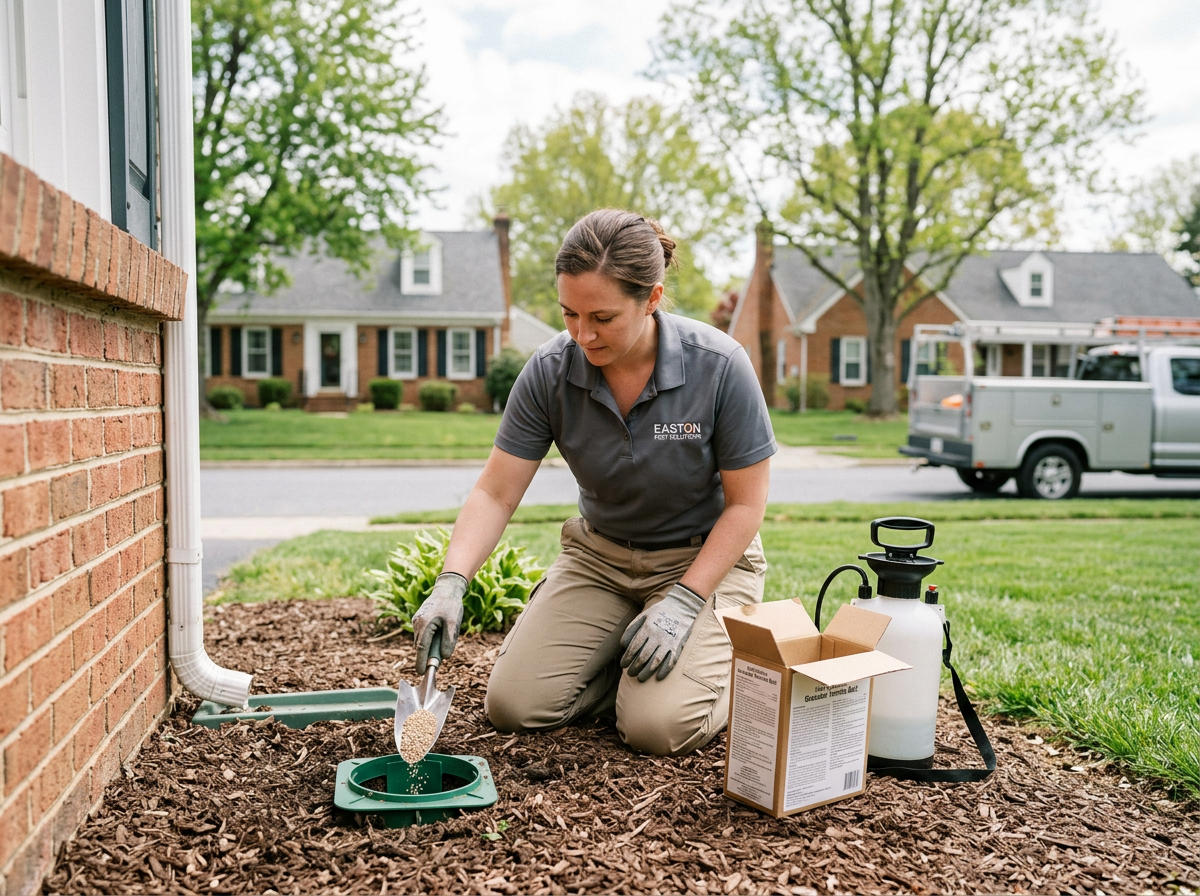
Liquid soil barriers and baiting systems serve as the two main approaches for termite treatment in Easton neighborhoods, with selection driven by soil moisture levels, foundation type, and proximity to the Chesapeake Bay. Properties built on piers over high water tables often favor one method while homes with standard crawl spaces suit the other based on observed mud tubes and spring swarmers indoors.
Liquid Soil Barriers for Easton Foundations
Liquid soil barriers create a treated zone around the foundation by trenching soil to a depth of 6 inches and applying termiticide along the perimeter. In Easton neighborhoods where railroad ties or mulch beds sit against siding, this method targets foraging tunnels that run within 6 inches of the structure. The approach works well on lots with standard soil drainage away from the Chesapeake humidity that keeps the ground consistently moist. Technicians inspect for mud tubes along piers and baseboards before installation, then backfill the trench to maintain the barrier. Homes in areas like Cordova and Trappe often have crawl spaces where this perimeter treatment reaches foraging distances up to 300 feet from the colony. Regular monitoring confirms the barrier remains intact against new mud tube formation during spring months when swarmers appear indoors.
Baiting Systems in High Water Table Areas
Baiting systems place stations in the soil at intervals of 10 to 20 feet around the foundation to intercept termite activity before it reaches the structure. Easton neighborhoods near the water table benefit from this method because stations sit above saturated soil layers where liquid applications can wash away. Stations contain slow-acting material that colony members carry back to the nest, addressing the full foraging range without disturbing the high water table. Properties with mulch beds against the foundation require clearance of at least 6 inches between the mulch and siding before station placement to reduce attractants. Spring swarmers indoors often trigger installation, after which quarterly checks track station activity. This system pairs with termite inspection visits that map existing mud tubes and guide station locations around piers common in Eastern Shore construction.
Matching Approaches to Neighborhood Conditions
Easton neighborhoods differ in soil type and moisture retention, so liquid barriers suit drier lots while baiting systems fit properties closer to tidal areas. Homes in Queen Anne and Tilghman show more success with bait stations when crawl spaces sit over saturated ground that dilutes liquid treatments. Spring termite treatment timing for Easton properties aligns with swarm season from March through June, when indoor swarmers signal active colonies. Seasonal termite swarming patterns on Maryland Eastern Shore help owners decide between the two methods by tracking when mud tubes first appear. Moisture control steps that reduce termite risk around Chesapeake Bay homes further support either approach by directing water away from foundations before treatment begins. A termite inspection identifies which signs are present and whether stations or a perimeter trench will reach the colony effectively.
Post-Treatment Monitoring in Easton
After either liquid barriers or baiting systems are installed, ongoing checks focus on new mud tube formation and swarm activity during spring months. Easton properties receive follow-up visits that verify station consumption or barrier integrity without relying on unverified warranty language. WDI reports for home sales document current activity levels so buyers understand the treatment history. Properties in neighborhoods like Trappe and Cordova benefit from annual reviews that adjust station placement or re-trench areas where mulch has been added against the foundation. These steps keep the chosen termite treatment effective against eastern subterranean termites common throughout the Eastern Shore.