
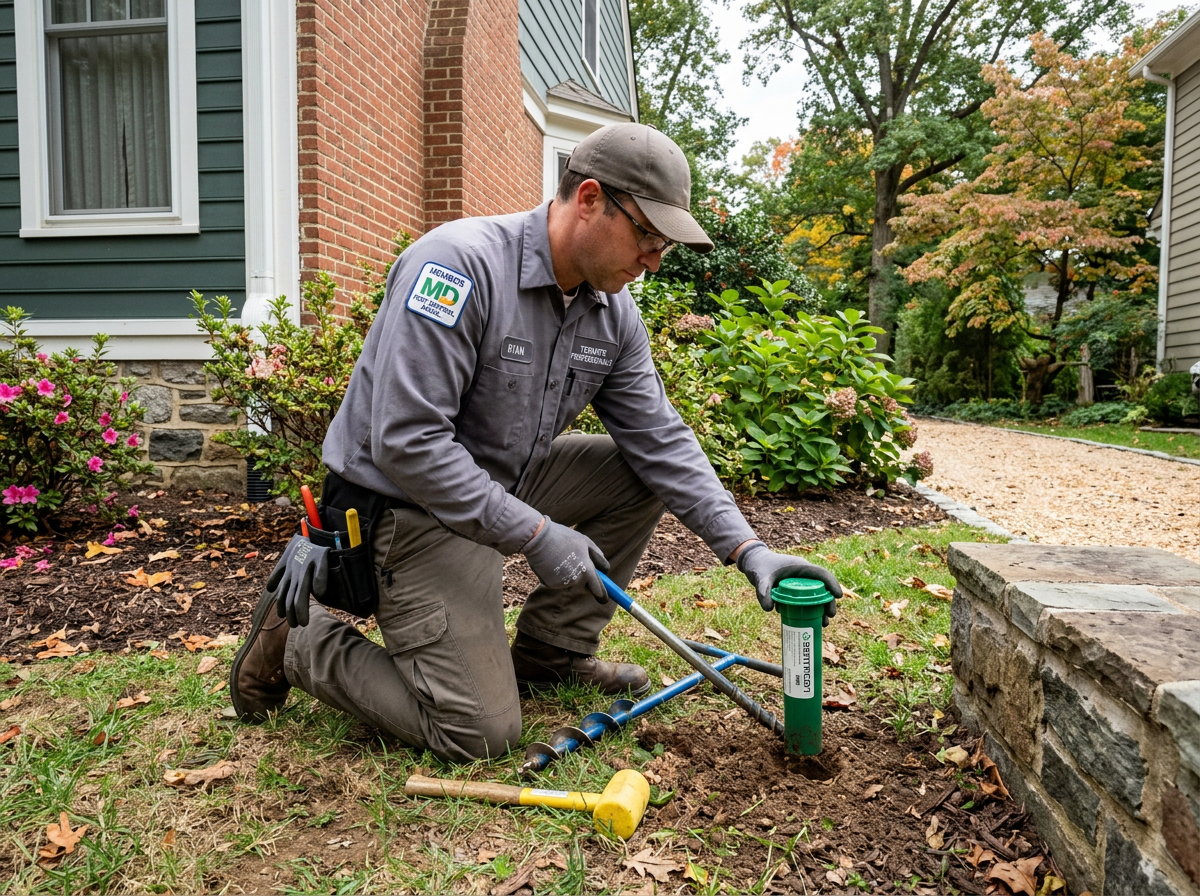
Whaleyville sits in Worcester County as a small rural Eastern Shore community where humid summers and mild winters keep soil moisture high year-round. Older frame houses often rest on piers or shallow crawl spaces directly over a high water table, creating the persistent wood-to-soil contact that draws subterranean termites.
Technicians based at 110 N Washington St #2b in Easton reach Whaleyville by heading south through the region toward Salisbury, using MD-346 as the main corridor. The same moisture conditions that support working waterfront properties nearby also affect homes here, requiring regular inspection of sills and foundation edges.
Nearby Salisbury service calls often combine with Whaleyville routes, letting crews address both the rural farmsteads and the small residential pockets along the highway in one trip.
Termite Treatment Services in Whaleyville, MD
Termite Treatment in Whaleyville
Targeted liquid barrier and baiting treatments for eastern subterranean termite colonies common to Maryland structures.…
Details →Eastern Subterranean Termite Control in Whaleyville
Targeted control for eastern subterranean termite colonies common to Maryland's Eastern Shore, addressing foraging patte…
Details →Termite Baiting Systems in Whaleyville
Termite baiting systems provide ongoing colony control for Eastern Shore homes without the soil disruption of a liquid b…
Details →Termite Inspection in Whaleyville
Detailed termite inspection that examines crawl spaces, basements, and exterior foundations for eastern subterranean ter…
Details →WDI Reports for Home Sales in Whaleyville
WDI reports prepared for real estate closings in Maryland identify active termite evidence and moisture issues common to…
Details →Termite Damage Repair in Whaleyville
Repairing wood damaged by eastern subterranean termites in Maryland homes where high water tables and pier construction …
Details →Around Whaleyville
We regularly work near:
- 📍MD-346 corridor
- 📍Worcester County rural roads
- 📍Whaleyville community center area
Termite Treatment in Whaleyville — Local Notes
- •Shallow crawl spaces sit close to the high water table, keeping joists and sills damp for much of the year and increasing termite foraging along the soil line.
- •Older frame construction on piers leaves untreated wood in direct contact with grade, a common entry point for colonies moving from the surrounding fields.
- •MD-346 provides the primary access route, but narrow rural driveways and limited turnaround space require smaller service vehicles for equipment delivery.
- •Hot summers accelerate colony activity while mild winters allow foraging to continue, so inspections remain useful in every season.