
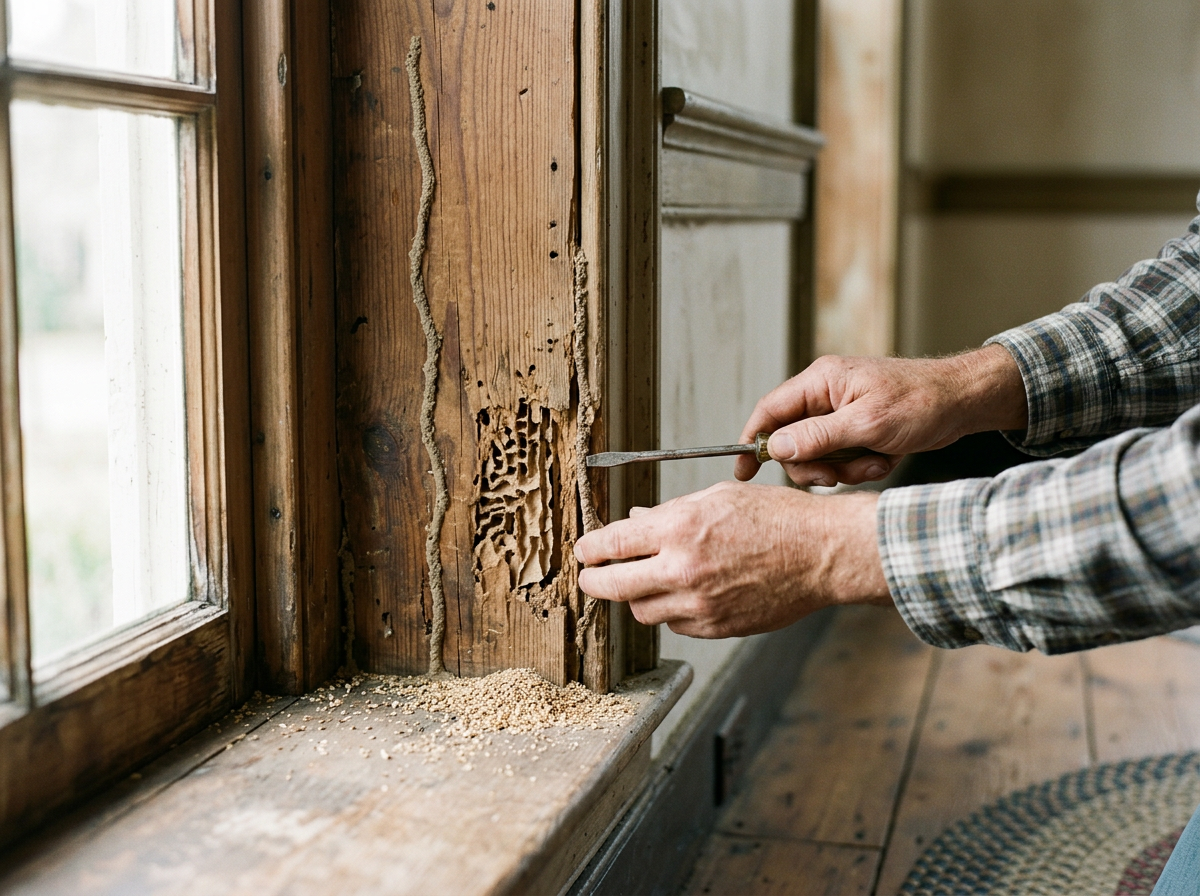
Trappe sits on Maryland's Upper Eastern Shore in Talbot County, where grain farms and scattered older farmhouses line the roads off US-50. These properties often feature untreated wooden sills and later additions that create multiple entry points for termites moving through the soil.
Hot summers and mild winters keep subterranean termite colonies active for most of the year. Technicians from the Easton office reach Trappe quickly by heading north on US-50, allowing same-day inspections for homes showing mud tubes along foundations or in crawl spaces beneath outbuildings.
Local construction mixes original 19th-century frames with later expansions, so treatment plans focus on both the main structure and any attached sheds or barns where wood meets soil.
Termite Treatment Services in Trappe, MD
Termite Treatment in Trappe
Targeted liquid barrier and baiting treatments for eastern subterranean termite colonies common to Maryland structures.…
Details →Eastern Subterranean Termite Control in Trappe
Targeted control for eastern subterranean termite colonies common to Maryland's Eastern Shore, addressing foraging patte…
Details →Termite Baiting Systems in Trappe
Termite baiting systems provide ongoing colony control for Eastern Shore homes without the soil disruption of a liquid b…
Details →Termite Inspection in Trappe
Detailed termite inspection that examines crawl spaces, basements, and exterior foundations for eastern subterranean ter…
Details →WDI Reports for Home Sales in Trappe
WDI reports prepared for real estate closings in Maryland identify active termite evidence and moisture issues common to…
Details →Termite Damage Repair in Trappe
Repairing wood damaged by eastern subterranean termites in Maryland homes where high water tables and pier construction …
Details →Around Trappe
We regularly work near:
- 📍US-50 corridor through Talbot County
- 📍Trappe Landing waterfront access
- 📍Local grain farms and outbuildings off Goldsborough Neck Road
- 📍Christ Episcopal Church grounds
- 📍Trappe Volunteer Fire Company station area
Termite Treatment in Trappe — Local Notes
- •Older farmhouses frequently have untreated sills resting directly on piers or shallow foundations that stay damp from the surrounding fields.
- •Additions built at different times create seams where termites can travel between sections without detection.
- •Grain bins and equipment sheds near the main house often sit on soil with high organic content, increasing foraging pressure during humid months.
- •US-50 provides direct access, so crews can bring truck-mounted equipment to rural properties without navigating narrow town streets.