
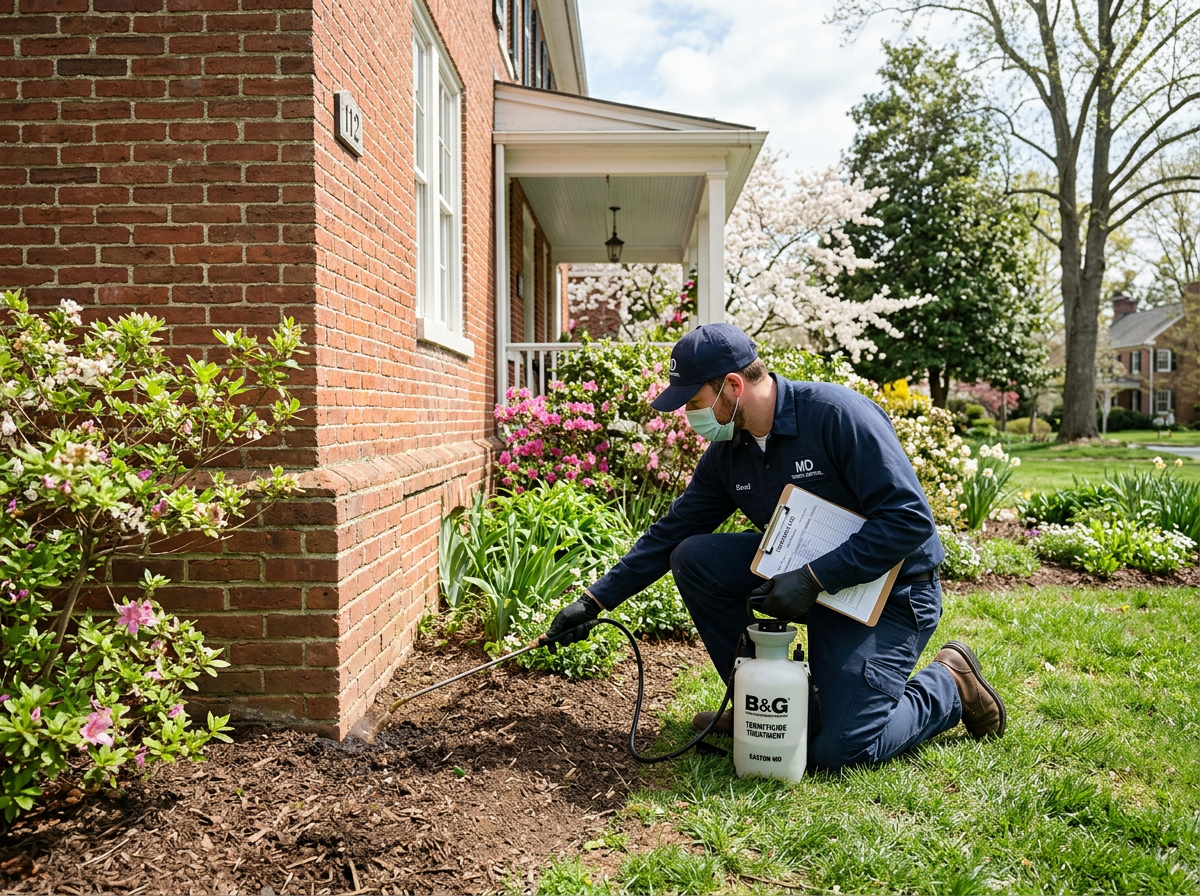
Aberdeen Proving Ground sits in Harford County on the main post of a major US Army testing facility. Homes and support buildings here often feature older stone or block foundations and full basements rather than crawl spaces.
Hot summers and mild winters keep soil moisture levels steady around foundations. Termite pressure shows up where untreated wood meets stone rubble walls or where additions tie into the original structures.
Technicians based at 110 N Washington St #2b, Easton travel the route across the Bay Bridge and up through the corridor to reach the proving ground for inspections and treatment.
Termite Treatment Services in Aberdeen Proving Ground, MD
Termite Treatment in Aberdeen Proving Ground
Targeted liquid barrier and baiting treatments for eastern subterranean termite colonies common to Maryland structures.…
Details →Eastern Subterranean Termite Control in Aberdeen Proving Ground
Targeted control for eastern subterranean termite colonies common to Maryland's Eastern Shore, addressing foraging patte…
Details →Termite Baiting Systems in Aberdeen Proving Ground
Termite baiting systems provide ongoing colony control for Eastern Shore homes without the soil disruption of a liquid b…
Details →Termite Inspection in Aberdeen Proving Ground
Detailed termite inspection that examines crawl spaces, basements, and exterior foundations for eastern subterranean ter…
Details →WDI Reports for Home Sales in Aberdeen Proving Ground
WDI reports prepared for real estate closings in Maryland identify active termite evidence and moisture issues common to…
Details →Termite Damage Repair in Aberdeen Proving Ground
Repairing wood damaged by eastern subterranean termites in Maryland homes where high water tables and pier construction …
Details →Around Aberdeen Proving Ground
We regularly work near:
- 📍Aberdeen Proving Ground
- 📍MD-715 corridor
- 📍US Army testing facility grounds
- 📍Installation housing areas
- 📍Phillips Army Airfield vicinity
Termite Treatment in Aberdeen Proving Ground — Local Notes
- •Stone and block foundations require a different inspection pattern than frame crawl spaces common on the Eastern Shore.
- •Basements create entry points at sill plates and utility penetrations where soil contact occurs along MD-715 edges.
- •Mature tree cover and leaf litter around installation housing add consistent moisture that supports termite activity year-round.
- •Army installation access points and restricted zones affect how crews stage equipment for treatment on base housing.